
When a property gets damaged, most policyholders assume that dealing with the insurance claim itself will be the biggest headache. But in reality, one of the main challenges often comes later; finding reliable tradespeople who can actually carry out the repairs.
For many policyholders, this can come as an unexpected source of stress at an already difficult time. Builders may be hard to reach, slow to respond, or unwilling to quote for insurance work. During busy periods, such as after storms or flooding, it can feel even harder to secure a contractor who’s both reputable and available.
It’s a stressful situation for homeowners, and because insurance brokers are often the first to hear about property damage, it can also place pressure on brokers who want to support their clients but might not know reliable contractors to refer them to.
In this blog, we’ll explore the challenge of finding reliable insurance repair contractors, why it exists, and how policyholders can make sure they end up working with the best team for the job.
Why the insurance repair market is under pressure
In recent years, the UK property repair sector has faced a number of challenges that have made it harder to secure reliable contractors for insurance work.
Two of the biggest factors are rising repair costs and a shortage of skilled tradespeople.
Rising repair costs
Inflation and the increased cost of living has impacted pretty much every sector, and construction is no exception. The cost of building materials has increased significantly in recent years, with timber, plasterboard, roofing materials, and insulation all falling victim to price fluctuations that ultimately affect how contractors price repair work.
It’s also key to acknowledge that insurance repairs differ greatly from general repairs or construction work in that they require accurate costings and detailed documentation before work can begin, so that insurers can assess the claim properly. While this helps ensure fairness and transparency, it can add extra time and complexity to the quoting process — time that needs to be absorbed into overall costs.
Widespread skills shortages
While costs are rising, we’ve seen the number of skilled tradespeople continue to shrink as the industry continues to battle widespread shortages. As a result, experienced trades such as roofers, joiners, plasterers, and electricians are in high demand across the UK, meaning many already have full schedules for months ahead.
When severe weather events cause widespread damage, demand for repairs can increase dramatically, making it even harder for homeowners to secure the right tradespeople.
Why many builders avoid insurance work (and why specialist repairers exist)
Another challenge that often surprises homeowners is that some builders choose not to take on insurance repair work at all.
At first glance, insurance repairs may seem similar to any other building project. However, behind the scenes they often involve significantly more admin, compliance requirements, and financial risk than standard private building work.
For contractors, taking on insurance repair projects can involve a considerable amount of work and preparation before the repairs can begin.
For example, insurance repair jobs typically involve:
- Detailed scopes of work
- Photographic documentation of damage
- Clear cost breakdowns
- Approval from insurers before work begins
- Slower payments and a reluctance for deposits to be paid
For larger repairs projects - particularly those involving significant structural damage - contractors may need to prepare detailed tenders or repair proposals in order to win the work. Preparing these tenders can in itself be a substantial task, requiring a great deal of time, effort and expertise — and at the end of it all, there’s no guarantee that the contractor will ultimately secure the project.
In some cases, contractors may spend hours, even days, preparing documentation and costings, only for the work to be awarded elsewhere or delayed due to claim decisions. For smaller building firms, this can mean the investment made into compiling and submitting tenders simply isn’t worth it.
Regardless of the extent of repairs work required, there’s also a chance that the quote won’t be approved by the insurer the first time around and will require some back and forth to agree a final price and scope, which can again be a lengthy and time-consuming process
For contractors who prefer straightforward renovation projects, this additional admin can make insurance repair jobs much less attractive than regular home improvement work. As a result, homeowners looking for contractors after a claim might find that many builders decline to quote once they realise the work involves an insurance claim.
.jpg?width=727&height=485&name=Builder%20%20Repairs%20(2).jpg)
Extra responsibilities for insurance repair contractors
Insurance repair work usually places additional professional requirements on contractors, who are required to maintain appropriate levels of insurance to cover things like public and employers’ liability, professional indemnity for design services, or contractors all risk insurance.
For larger or more complex repair projects, insurers may require minimum levels of cover that smaller builders don’t always automatically hold, so maintaining these policies adds another layer of cost and responsibility for contractors involved in insurance-related work. Sometimes insurers will even insist on specific indemnities or warranties on particular aspects of work carried out.
Additionally, for many repair projects contractors may also be required to take on formal roles such as Principal Designer or Principal Contractor. These roles carry significant legal responsibilities, as contractors must ensure that risks are properly assessed, managed, and communicated throughout the project.
Because of these complexities, many contractors choose to avoid insurance repairs work and leave it to the specialists who understand the documentation, compliance requirements, and communication processes involved in managing claim-related repairs. These specialists also have the systems and experience needed to coordinate projects that involve insurers, loss adjusters, loss assessors, and brokers.
For homeowners, working with a contractor who’s familiar with these requirements can take a lot of stress out of the situation. Instead of navigating all the technical and regulatory barriers alone, policyholders benefit from a team that understands how insurance repairs work and how to move the project forward efficiently.
The challenge of finding a builder who will quote for and complete the work
A significant frustration in the insurance repair process is that even when homeowners do find a contractor willing to provide a quote, the process doesn’t always end there.
It’s common for policyholders to experience situations where contractors:
- Don’t respond to enquiries
- Provide a quote, but not in a format that will be accepted by insurers
- Revoke their offer to help when they realise insurer approval is required
- Accept the work but struggle with the insurance documentation, lengthening the end-to-end repair process
- Don’t understand the process that needs to be followed before work can begin
If you’re already dealing with property damage, this uncertainty around finding the right tradespeople - who are able, willing, and qualified to complete insurance repairs work - can make the entire experience even more stressful. Not to mention the fact that delays in finding the right contractor can leave homeowners living with temporary repairs, ongoing disruption, or increasing concerns about further damage.
Many policyholders also feel unsure about how to evaluate builders. Without experience in construction or insurance repairs, it can be difficult to know whether a contractor is suitable, or their quote is appropriate.
This uncertainty often leads people to seek advice from the person they trust most in the process — their insurance broker.
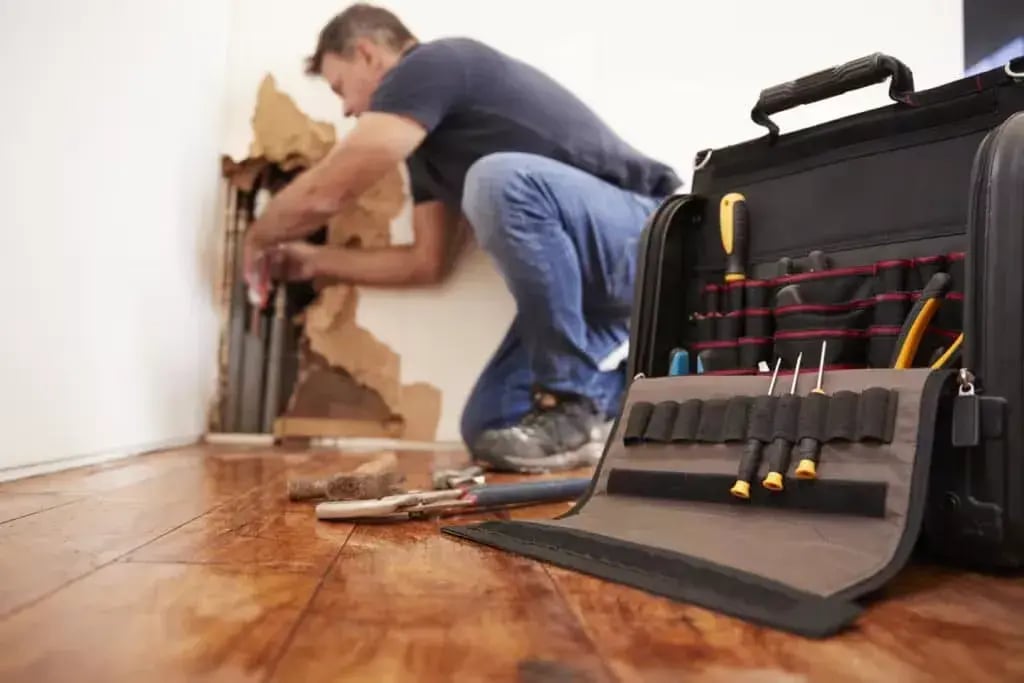
The broker's role: Supporting clients through a difficult process
Insurance brokers often become an important source of guidance when clients experience property damage, as they know the industry enough to be able to cut through the noise and offer clients the clarity they’re searching for.
A common first port of call is to refer the client straight to their insurer to kick-start the claims process. From here, the insurer will often instruct the policyholder to gather some repairs quotes, before appointing a contractor from their existing network to carry out the repairs.
However, this isn’t always the best line of action. Insurer-approved contractors aren’t necessarily less skilled, but they work within a network that’s designed to manage large volumes of claims consistently. As a result, insurers (and the contractors they appoint) often prioritise cost control and the fast closure of claims, ultimately sacrificing thorough damage assessment and long-term repair quality.
Learn more about the risk of insurer-approved contractors with our recent blog.
When advised to gather repairs quotes, it’s often the case that homeowners don’t know the difference between a quote that’s realistic and considered, and one that covers a cheaper patch-up job.
This can play out in two ways. Either:
- The homeowner receives a cheap quote and the insurer accepts it (because it’s cheap), and the repairs are completed to a lower standard in line with the lower price point; or
- The homeowner finds a specialist who’s thorough in their work and provides a reasonable quote to cover all costs, but the insurer talks it down or dismisses it and instead appoints their own contractor to take advantage of discounted rates.
In either case, the insurer remains focused on limiting profit lost, and the benefits to the homeowner are promptly pushed aside.
For brokers who want to ensure their clients receive timely and reliable support, and the best outcome from their claim and repairs, having access to an experienced repair partner can provide another, more viable and reliable option. As an independent insurance repair specialist, we’re on your client’s side and always act to benefit them. Find out more about our services and referral partner programme.
Red flags to watch for when choosing a builder
If you’re in the process of submitting an insurance claim for property damage and you’re looking for a contractor to complete the repairs work, there are a few warning signs to be aware of:
- Quotes that are vague or lack detail
- Contractors unwilling to document the damage properly
- Requests for large upfront payments
- Limited communication or unclear timelines
- Little or no experience with insurance repairs
- Companies who can only be reached via a single contact number, in case they ghost you after a problem arises
Insurance repair work requires careful documentation and coordination with insurers. Contractors who are unfamiliar with this process may unintentionally cause delays or complications later down the line.
Why insurance repair specialists make a difference
The beauty of working with an insurance repair specialist comes with knowing that they’re experts in this type of work, and know exactly what to expect from the process and how to navigate any barriers so that the project stays on track.
Insurance repair specialists understand both sides of the process: the construction work itself and the documentation insurers need in order to approve repairs.
This experience allows them to:
- Thoroughly assess the damage
- Bring a trusted loss assessor on board if necessary
- Prepare insurer-ready repair scopes and quotes
- Communicate clearly with insurers, loss adjusters, and loss assessors
- Coordinate the various tradespeople required to carry out the repair work
- Manage repairs in line with policy requirements and building standards
For homeowners, this means fewer uncertainties and a clearer path towards getting repairs completed properly and getting back to normal.
For the brokers that refer their clients to these specialists, it means fewer headaches landing on their desk, and happier clients that tend to return when it comes time to renew their policy.
Need expert support with home insurance repairs? Contact our team today.
AIR: A ready-made solution for quality insurance repairs
In the world of home insurance repairs, experience matters. With extensive experience in insurance repairs, specialist repair teams like Action Insurance Repair understand the practical challenges homeowners face when damage occurs.
When a contractor has a good understanding of both sides of the coin, we can help to ensure that all the necessary steps - from documentation and approvals to compliance and final repairs - are handled properly. From the initial assessment through to coordinating trades and completing repairs, our ultimate goal is to make the process as smooth and straightforward as possible.
In many cases, having an experienced team involved early in the claim can help to prevent unnecessary delays and ensure repairs are completed efficiently and to a high standard.
Need our help? Get in touch today.

FAQs
Why is it so hard to find builders for insurance claims?
Insurance repair work often involves more documentation and approval stages than standard building projects. Some builders prefer to focus on private work where the process is simpler. During busy periods, such as after storms or flooding, demand for repair work can also increase significantly, making reliable tradespeople harder to secure.
Can I choose my own contractor for insurance repairs?
In many cases, yes. Most insurance policies allow policyholders to appoint their own repair contractors, provided the proposed repairs and costs are approved by the insurer. The best approach is usually to check your policy wording and have an open conversation with your insurer about the options available.
What should I look for in an insurance repair specialist?
Ideally, you should look for contractors with experience handling insurance claims, who can provide clear repair scopes and quotes, communicate well, and liaise directly with insurers or loss adjusters where needed. This experience can help ensure the repair process runs as smoothly as possible.
Will choosing my own repairer delay my claim?
Not necessarily. In fact, working with a contractor who understands insurance claims can often help to avoid delays. Experienced repair specialists know how to prepare the documentation insurers require and can help ensure repairs are approved efficiently.
Why do some builders refuse insurance repair work?
Insurance repairs can involve additional admin, documentation, and staged approvals, meaning more work and a much lengthier process than private building projects. For some contractors, this extra process can make the work less appealing, which is why specialists who focus on insurance repairs are often better equipped to manage these projects.